.png)

Local News
Five South Florida Stories You Probably Missed This Week


8
Min
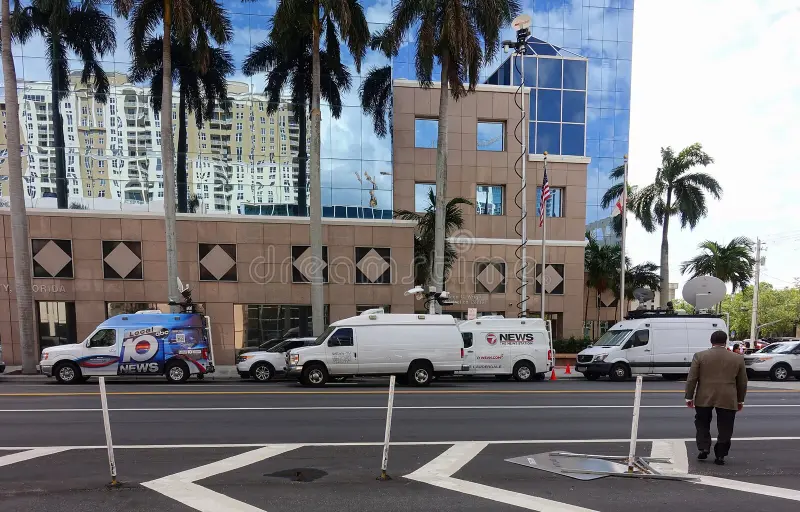
From shrinking schools to surveillance cameras, here are five South Florida stories worth knowing this week.
South Florida produces more news in a week than most people could reasonably keep up with. City halls hold meetings while you're at work. County commissions debate multimillion-dollar decisions. School boards decide the future of neighborhood schools. And sometimes government officials spend an afternoon debating whether anybody outside South Florida actually knows what “Broward” is.
That’s what The County Five is for. Every week, The County will bring you five stories from across South Florida that might not have dominated your timeline, but could have a real impact on where we live.
Here’s what you may have missed this week.
BROWARD COUNTY — Broward County Public Schools is getting smaller, and the consequences are starting to become impossible to ignore. After closing six campuses for the current school year, the district is considering closing as many as 10 more next year as enrollment continues to decline. On the first day of this school year, Broward's total enrollment, including charter schools, was down by more than 13,000 students, according to CBS News Miami. District officials have said Broward has tens of thousands of empty classroom seats. Schools being considered include Lloyd Estates, Oakridge, Banyan, Coral Springs, Dolphin Bay and Hollywood Park elementary schools, along with Forest Glen, Walter C. Young and William E. Dandy middle schools.The discussion is already generating resistance from families who don't see these buildings simply as numbers on a district spreadsheet. Some have attended School Board meetings asking officials to keep their neighborhood schools open.
Closing an under-enrolled school may save money, but a neighborhood school is also a community institution. Its closure can mean longer trips to class, families being reassigned to unfamiliar campuses, teachers and staff being displaced and neighborhoods losing institutions that have existed for generations. And Broward isn't alone. Miami-Dade is also examining schools for potential closure as South Florida's two largest districts confront declining enrollment. The bigger question may therefore be less about which 10 schools close and more about why thousands of students are disappearing from South Florida's traditional public schools in the first place.
That is a story The County will continue following.
PALM BEACH COUNTY — The artificial-intelligence boom may be racing ahead nationally. Palm Beach County has decided it wants some time to think.
County commissioners voted Thursday to advance a one-year moratorium on new large-scale data centers while officials develop regulations governing their development. The proposed rules target facilities requiring enormous amounts of electricity and follow months of controversy surrounding data-center development in western Palm Beach County. The fight exploded earlier this summer around Project Tango, a proposed hyperscale AI data center at the Central Park Commerce Center near Loxahatchee.
The revised project contemplated more than one million square feet of data-center space as part of a roughly 3.6-million-square-foot development. County commissioners ultimately rejected the expanded proposal 5-1 in July after a marathon public hearing. Residents had raised concerns ranging from noise and water consumption to electricity demand and the project's proximity to homes and a nearby elementary school. Now county officials are trying to answer a much larger question: What rules should South Florida establish before the AI infrastructure boom arrives in full force?
AI doesn't exist only in “the cloud.” The technology depends on enormous physical facilities packed with servers. Those facilities need land and vast amounts of electricity, while their cooling and infrastructure requirements can create additional environmental and utility questions. Palm Beach County officials say the moratorium will give them time to develop regulations addressing issues including water, electricity, noise, infrastructure and emergency response. That makes what happens in Palm Beach bigger than one development. If South Florida becomes a major destination for data centers, the rules being debated now could determine where they're built, what developers have to provide communities and how much infrastructure residents are willing to dedicate to the AI economy.
BROWARD COUNTY — If you've driven around Broward lately, there's a decent chance a camera has seen your car. Automated license-plate readers, many operated by Flock Safety, photograph passing vehicles and allow law-enforcement agencies to search information including license plates and vehicle characteristics. The cameras have increasingly become the subject of a privacy backlash in Broward and across the country. According to DeFlock, an independent project that maps the devices, there are roughly 800 cameras in Broward County and hundreds more in Miami-Dade. Local10 reported that estimate earlier this month after two Flock cameras in Fort Lauderdale were found “melted and slashed.” Police opened an investigation into the damage. Opposition has moved beyond the internet. South Florida privacy activists have organized a demonstration in Davie against automated license-plate readers, arguing that the technology lacks sufficient safeguards against abuse. Supporters, meanwhile, argue that license-plate readers provide police with a powerful investigative tool for identifying vehicles associated with crimes.
The debate isn't really about whether a camera can read a license plate. It's about what happens to the information afterward. Who can search it? How long is it retained? Can another police department access it? What constitutes a legitimate search? And what happens when someone with access to the system abuses it? Those questions are becoming harder for governments to ignore as scrutiny of Flock grows nationally. Florida Gov. Ron DeSantis said this week that the public is right to be concerned about the proliferation of the cameras and called for greater oversight.
For Broward residents, there's an even simpler question: How many of these cameras are watching us, and who exactly is watching the watchers?
MIAMI-DADE COUNTY — For thousands of South Floridians, a budget line in County Hall could mean a much longer trip to work. Miami-Dade Mayor Daniella Levine Cava's proposed $14.3 billion county budget would eliminate 12 Metrobus routes and reduce service on dozens of others as the county looks for savings. The routes proposed for elimination are 16, 25, 42, 57, 70, 132, 203, 204, 272, 279, 288 and 338. Six are operated directly by the county and six through contractors. The proposal would also reduce some early-morning and late-night service. County officials have said the changes are aimed at lower-ridership services as Miami-Dade confronts a difficult budget environment. But CBS News Miami reported that the proposed changes could affect roughly 7,500 riders.
Public-transit cuts don't affect everyone equally. A 5 a.m. bus might look “low ridership” on a spreadsheet. For the housekeeper, airport employee, restaurant worker or security guard sitting on it, that bus may be the difference between getting to work and losing a job. And reducing service can create its own vicious cycle: buses become less convenient, ridership falls further, and declining ridership becomes justification for another round of cuts. The proposal isn't final. Miami-Dade residents will have opportunities to weigh in during county budget hearings in September before commissioners approve the final spending plan. For riders who depend on one of the affected routes, those hearings could be consequential.
BROWARD COUNTY — We finish this week's County Five with one of those wonderfully South Florida disputes that somehow involves tourism, civic identity and potentially millions of dollars. Broward County Commissioner Alexandra Davis recently raised the idea of changing the county's Visit Lauderdale tourism branding to better represent the entire county. There's a certain logic to the argument. Fort Lauderdale is one city. Broward County has 31 municipalities.
Why should tourists looking at the county's official destination brand think the whole place is Fort Lauderdale? Then came the price tag. Visit Lauderdale CEO Stacy Ritter estimated that a full rebrand could cost about $2 million. And other commissioners weren't exactly sold. Mayor Mark Bogen argued that Fort Lauderdale has something Broward County lacks among potential visitors: name recognition. Business and tourism representatives also pushed back, arguing that adding Broward to the branding could confuse potential visitors and weaken an established destination brand. Davis ultimately withdrew the proposal after it became clear there wasn't sufficient support, although she left open the possibility of revisiting the issue later.
Underneath a mildly funny branding dispute is a legitimate question about South Florida's identity. Fort Lauderdale is internationally recognizable. But Broward County stretches from Hollywood to Deerfield Beach and from the Atlantic Ocean to communities miles west of downtown Fort Lauderdale. Those cities compete for tourism dollars, development and recognition while sharing a county government, airport, transit system and broader economy. So perhaps the real question isn't whether Broward should spend $2 million changing a logo.
It's this: What exactly do we mean when we say “Fort Lauderdale” — and does the rest of Broward want to be included?
For now, Visit Lauderdale survives. And Broward remains Broward, at least to those of us who know where it is.
That's The County Five.
Every week, The County will dig through the government meetings, neighborhood fights, development proposals and stories buried beneath South Florida's biggest headlines to bring you five things worth knowing. Because some of the decisions that affect your life the most won't make national news. Sometimes, they won't even make your timeline. See something we should be covering? Send The County a tip.

.jpeg)
%20(450%20x%20345%20px).png)
