.png)

Don’t Close Broward’s Neighborhood Schools Without Fighting to Save Them First

June 28, 2024

12
Min
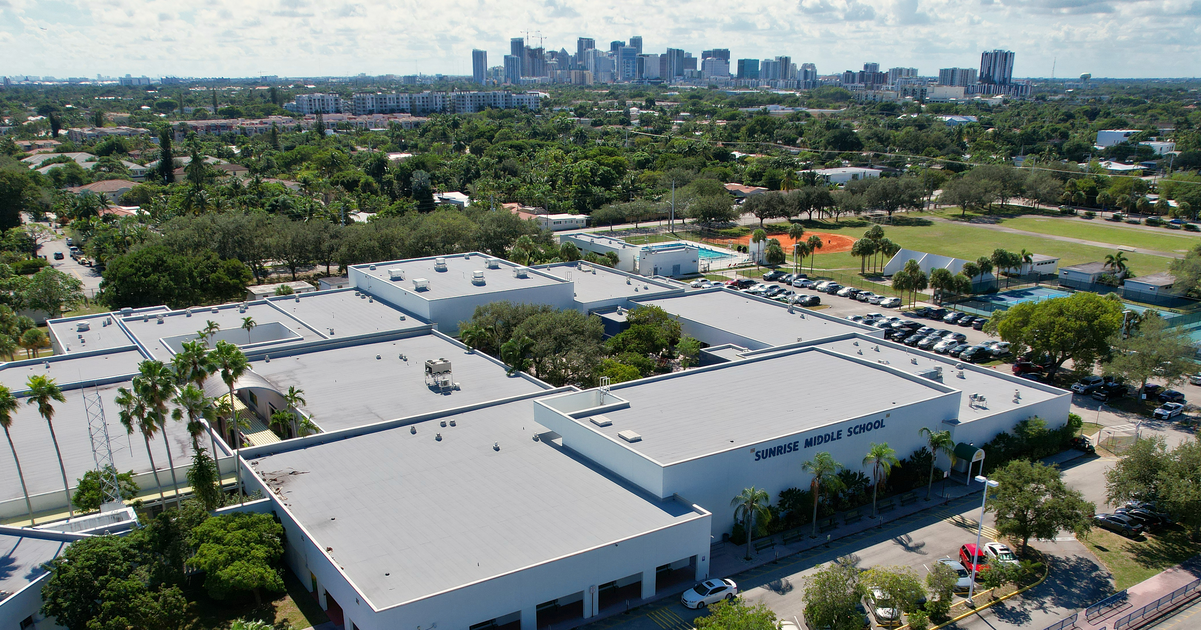
Broward families have trusted neighborhood public schools for generations, along with the classroom teachers, support staff, and administrators who power them. These schools are more than brick-and-mortar buildings; they are safe havens where many have learned to read and write, made lifelong friendships, discovered their talents, and built community.
In recent years, however, these schools have been put at risk by declining enrollment and thousands of empty seats. Broward County Public Schools now have a staggering 60,000 empty seats across the district. Taxpayers continue to maintain these facilities even as many are being hollowed out. Meanwhile, Florida’s rapidly expanding private-school voucher system continues to grow while traditional public schools struggle with declining enrollment and budget shortfalls.
The Broward School District’s answer to these challenges has been to close or consolidate more neighborhood schools, as it has done in previous years. Now, another ten schools face closure or repurposing.
Not so fast.
“Redefining Schools” does not have to mean permanently closing them. Before Broward Schools permanently shutters one more neighborhood school, the district owes Broward families and taxpayers something more than Excel spreadsheets and enrollment graphs. The district owes the public proof that it has exhausted every available avenue to save, transform, support, or reinvent these at-risk facilities.
An empty classroom is a problem that should alarm us all. Keeping and maintaining significantly under-enrolled schools costs money, draining resources that should not be diverted from teacher salaries, staffing, and the programs students need to learn and thrive. Closing or consolidating some schools may be unavoidable, and it may be the right move for some facilities.
But permanently shuttering a neighborhood school is a permanent response to what may prove to be a temporary problem.
When a school is shuttered, teachers and staff are shuffled around or laid off, and students are moved to new, sometimes unfamiliar schools. Families are forced to find new routines, and students’ and parents’ schedules are disrupted. While these buildings can be leased, sold, or converted for another use, the community history and institutional knowledge tied to them are wiped away. And something else is being left out of the equation: should enrollment patterns change five or ten years from now, rebuilding the public infrastructure and restoring what was lost would be considerably more expensive than preserving these facilities today.
That’s why we believe that closure should be the district’s last resort, not the default choice.
The district should first ask itself a more difficult question: Why are families leaving our neighborhood schools?
Sixty thousand empty seats in our classrooms did not happen overnight.
Broward has changed. The cost of living has made it much more difficult for working families to remain in the communities where they grew up. As a result, birth rates have fallen and demographics have shifted. Private schools are now competing for the same pool of students, and Tallahassee has expanded Florida’s voucher system to subsidize private school enrollment at the expense of public schools. Some working families are taking the gamble of enrolling their children in those institutions.
Permanently shuttering schools is a reactive way to address the consequences of those trends. It does not address the underlying causes. If neighborhood schools are losing students, especially to for-profit private schools, Broward County Public Schools should understand why and give families a reason to stay in, or return to, the district.
Some ideas worth exploring include repurposing under-enrolled campuses into magnet programs, expanding career and technical education, and building specialized STEM programs. Some facilities could be transformed into early-childhood education centers. Workforce and vocational training programs could be implemented in these schools, with entire wings dedicated to them in partnership with Broward College, universities, public institutions, and private partners. Some facilities could also house community health clinics, social services, and enrichment programs.
Broward Schools lack political will and innovation.
Broward County Public Schools places the burden of declining enrollment and budget shortfalls on parents and families. The true burden should fall on the bloated administration of a top-heavy school district, which has more administrators and overpaid bureaucrats than necessary.
Does the district survey parents who withdraw their children? Are schools that are losing students being examined to determine where those students are going and what could have been done better to improve the quality of education? Is the district assessing whether transportation, academic offerings, school culture and climate, housing displacement, or vouchers are contributing to each school’s decline?
Permanently shuttering schools is a reactive way to address the consequences of those trends. It does not address the underlying causes. If neighborhood schools are losing students, especially to for-profit private schools, Broward County Public Schools should understand why and give families a reason to stay in, or return to, the district.
Who is affected by school closures? How much farther will students displaced by closed schools have to travel? Will they have additional bus routes? Will parents working multiple jobs be forced to juggle taking their children to different campuses in the morning, rather than making one stop as they did previously? What happens to the after-school programs or magnet programs at those schools? Will siblings be separated into different schools? How will these changes affect students with disabilities? What will be the economic impact on the neighborhood? Broward should pay special attention to ensure that these closures do not disproportionately affect historically Black, lower-income, or underserved communities.
These are the questions that should have been asked long ago, if they have not been asked already. The findings should be made public.
Broward’s taxpayers and families deserve a comprehensive review of why a school district that once struggled with overcrowded classrooms now has tens of thousands of empty seats and hollowed-out hallways. That information and insight should guide the “Redefining Our Schools” process, rather than a top-down approach in which the public learns of a decision at a pretend town hall. The status quo is not redefining schools. It is managing their decline.
“Redefining Our Schools” cannot be a bureaucratic process in which district administrators in a fancy glass office building quietly decide the fate of neighborhood schools and then host “public meetings” after the decision has already been made. The public should truly participate in these decisions. Public engagement is not real engagement if the district only listens after the real decisions have already been made behind closed doors.
We are not arguing that the district should keep every school open forever. Facts matter, and so does the data. There is no reason to continue maintaining and funding empty buildings indefinitely while teachers, staff, and students lack resources elsewhere. After genuinely attempting to save these schools, there may be cases where enrollment simply cannot justify continued operation. If that is true, then the district should plainly make that case and make the tough call that follows. But the burden should be high, and we do not believe the district has fulfilled its commitment.
Broward may need fewer traditional public schools in the future. It does not, however, need weaker neighborhoods or fewer educational opportunities. So before one more school is shut down permanently, the district should try something ambitious, innovative, and bold.
Save the schools that can be saved. Repurpose where necessary. Consolidate what can be consolidated. And close only when all other options have failed.
Because an empty classroom is a problem that can be fixed. But a permanently shut-down neighborhood school is a decision that cannot be easily undone.
Endorsements are the viewpoints of The County's Editorial Board members Elijah Manley, and Luc Saint-Genies. Endorsement do not reflect the personal beliefs and preferences of The County's writers, partners, or affiliates.

